
In yoga, Vinyasa yoga is one of the most practiced yoga styles. It is worldwide popular due to its dynamic style of practicing. The Vinyasa flow sequence is practiced when breath work is integrated with every yoga movement. The flow of breath combined with each yoga movement makes it a versatile and powerful combination.
Vinyasa yoga poses allow breath-synchronized movement that helps to connect body, mind and soul. Today, it is widely accepted due to its rooted traditional benefits practiced with modern creativity.
Whether you are a beginner or an advanced experienced practitioner, the ashtanga yoga vinyasa sequence is beneficial for all to build a balanced yogic lifestyle. This detailed Vinyasa Yoga Sequence Guide will cover all the essential vinyasa yoga poses and their benefits to help yoga practitioners with essential tips and knowledge.
What Is a Vinyasa Yoga Sequence?
In Vinyasa yoga, the term “Vinyasa” is a Sanskrit term which means “to place in a special way”, “alignment”, “alignment of movement, breath and body”. A Vinyasa Yoga Sequence is the series of the Vinyasa yoga poses that help to link our body with breathing. In Vinyasa yoga poses sequence, each pose is practiced mindfully to create a continuous flow linking our mind, body and breath. Due to its flowing style of practice, “Vinyasa yoga” is also called “Flow yoga”.
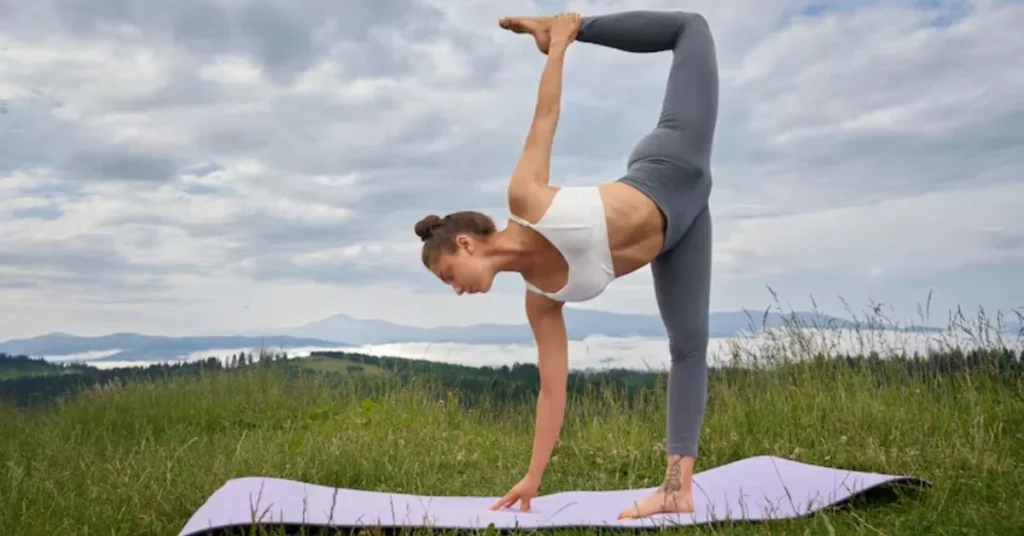
In comparison to “Ashtanga Yoga” which follows a fixed sequence, the power vinyasa yoga sequence follows a logical structure with 3 main stages. The first stage where you warm-up your body & mind, that is opening and preparing your body parts with simple flows. The second stage where you practice peak poses to build strength or focus. The third stage where you cool down and give relaxation to your body and mind.
Structure of a Vinyasa Yoga Sequence Guide
Broadly, there are six most essential stages to learn before building a proper ashtanga yoga vinyasa sequence. These stages are as follows:-
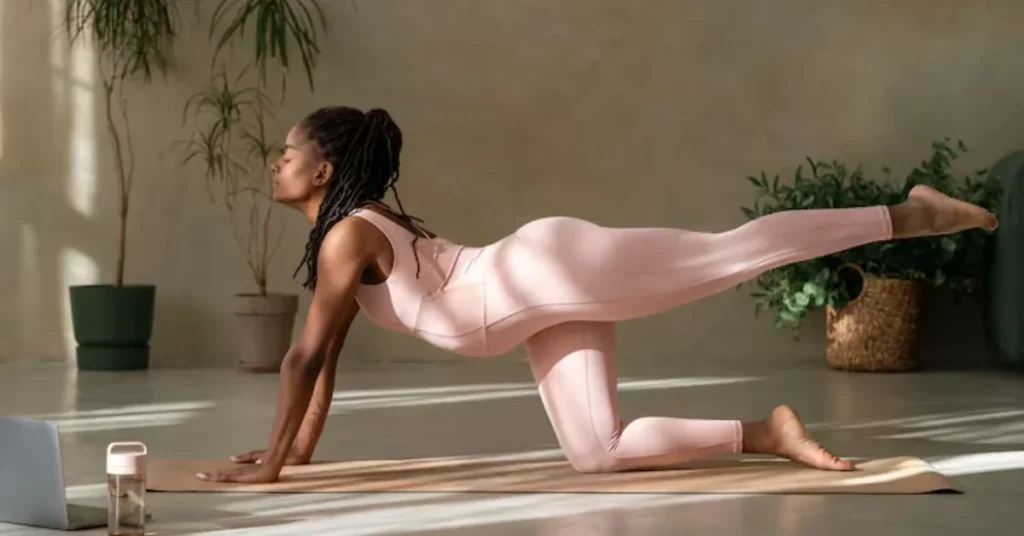
1. Centering and Breath Awareness
Benefits from practicing Vinyasa yoga poses start when one learns about breath awareness while holding yoga poses. Each and every pose in Vinyasa yoga sequence begins with grounding.
- Sit comfortably and practice deep breathing (Ujjayi breath), keeping all the focus on your breath.
- Mindfully practice the movement integrating with each inhalation & exhalation and Set and calm the mind throughout the practice.
2. Warm-Up (Gentle Movements)
Warm-up means opening & preparing the body with simple easy flows. It is highly recommended to warm-up with gentle movements before proceeding to peak pose practice. It reduces the risk for injuries & mishap during yoga practice.
Activating the body by preparing the muscles and warming up is an important step. The warm up can be done with the following vinyasa flow yoga poses:-
- Cat-Cow stretch
- Gentle seated twists
- Neck and shoulder rolls
3. Sun Salutation (Core Flow)
Sun Salutations is a complex vinyasa pose that consists of 12 dynamic poses. Each yoga pose in Sun Salutation is followed by breathing sequences and helps to build core flow.
Includes the following basic sequence:-
- Mountain Pose
- Forward Fold
- Plank
- Chaturanga
- Upward Dog
- Downward Dog
4. Standing and Balancing Poses
After a good warm-up, the body is activated to practice standing, balancing poses. These poses help in building strength & stability while improving body balance & flexibility.
Common standing & balancing poses in vinyasa yoga poses are as follows:-
- Warrior I & II
- Triangle Pose
- Crescent Lunge
- Tree Pose
5. Peak Pose (Advanced Focus)
This is the stage where you advance your practice with the most challenging peak poses. Compared to other stages and poses, this stage is more intense, strengthening-based and physically demanding that helps to improve focus, mindfulness and body stability.
- Backbends (Wheel Pose)
- Arm balances (Crow Pose)
- Deep stretches (Splits)
6. Cool Down and Relaxation
This is the last and final relaxed stage where the vinyasa flow sequence ends with calming poses. It helps to cool down, to recover & calm the breath, mind & body.
In these stage, following yoga poses can be practiced:
- Seated forward bends
- Gentle twists
- Hip openers
- Final relaxation (Savasana)
Read Also:- Iyengar Yoga Poses (Asanas)
Vinyasa Flow Sequence for Beginners
Start your yoga journey with this gentle Vinyasa flow sequence for beginners, designed to help you build balance, focus, and confidence step by step.
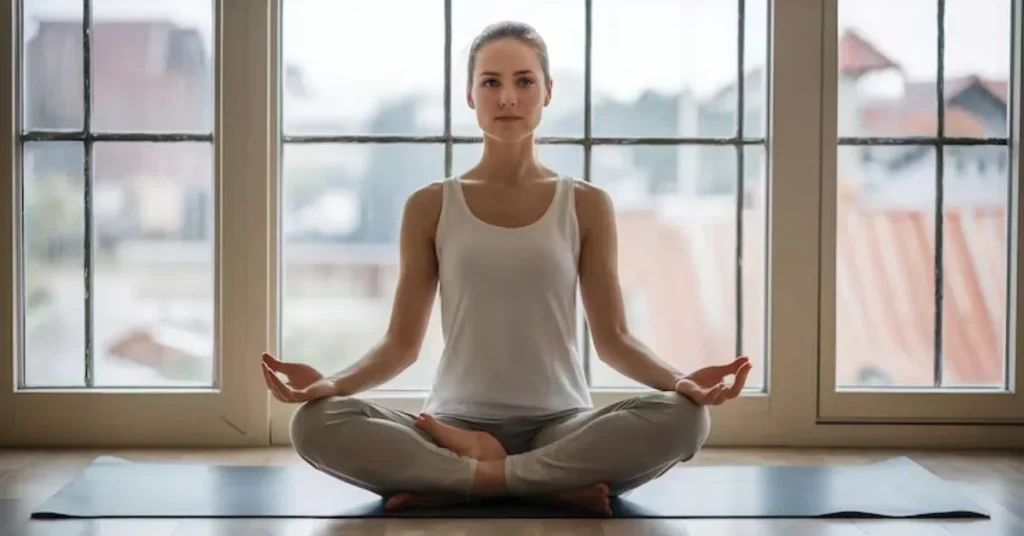
1. Sukhasana (Easy Pose)
Sukhasana is also known as “Easy Pose”. It is a beginner-friendly cross-legged pose. In this pose, the hands should be resting on the knees keeping the spine upright. This sitting yoga pose is ideal for meditation and pranayama.
Benefits:
- It helps in stretching knees and ankles.
- It strengthens the back and helps in improving posture.
- It calms the mind and helps in reducing mental stress.
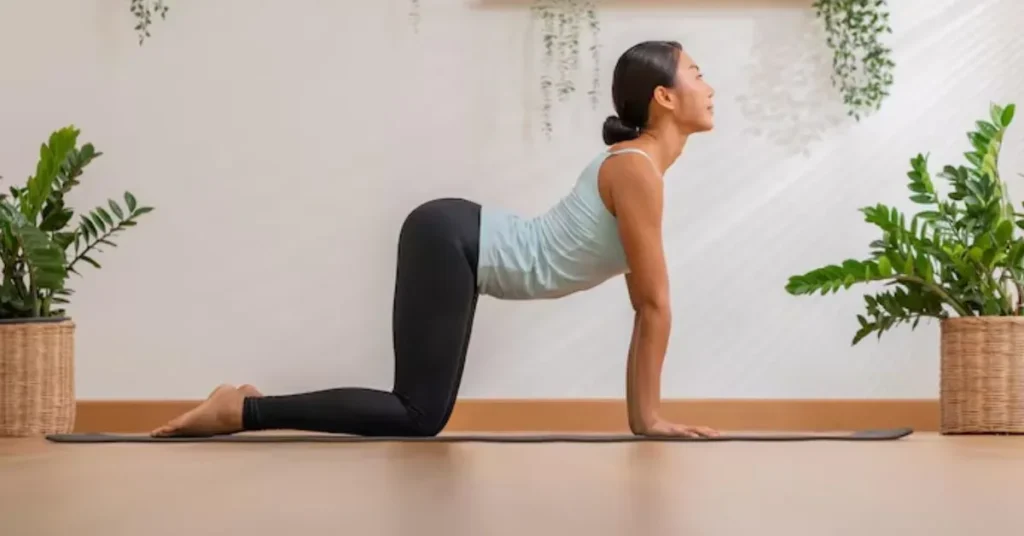
2. Cat-Cow Pose (Cat-Cow Stretch)
Cow pose is also called “Bitilasana” while Cat pose is called Marjaryasana. In Cat-Cow Stretch, both Bitilasana and Marjaryasana are integrated to practice as warm-up poses in Vinyasa yoga sequence. This integrated pose helps in stretching the front body parts and increases body flexibility.
Benefits:
- It increases body flexibility especially the spinal flexibility.
- It reduces the physical pain by giving quick relief.
- It helps in warming up the muscles by preparing the body for peak poses.
3. Downward Facing Dog (Downward Dog)
This asana helps in full body stretches where inversion is practiced creating a V-shape. In this pose, an inverted triangle shape is created that helps in opening multiple body parts.
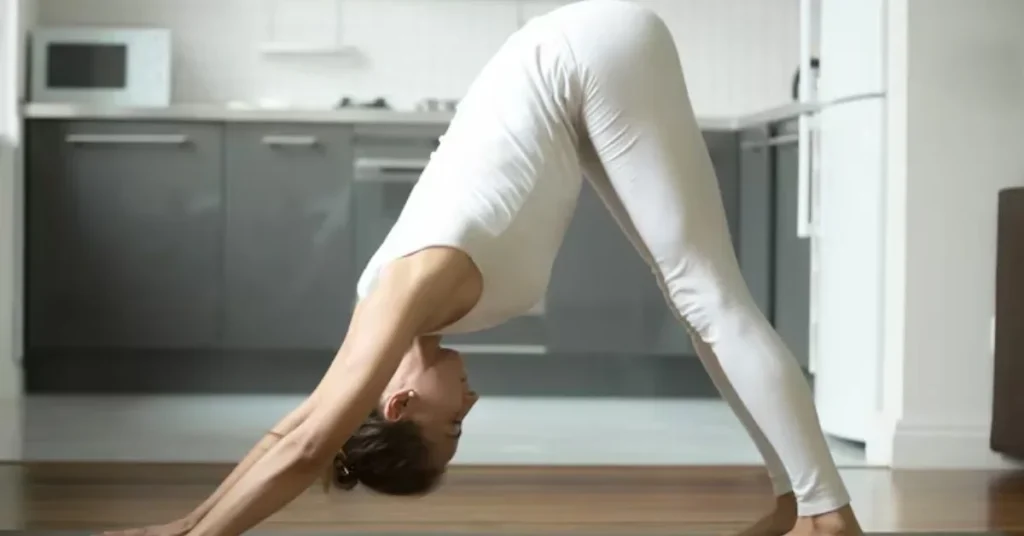
Benefits:-
- It relaxes the arm, neck and shoulder stress.
- This pose improves blood circulation and strengthens multiple parts at a time.
- It energizes the body and lengthens the spine.
- It improves full body blood circulation.
4. Warrior I (Virabhadrasana I)
In this standing pose, step your one foot in forward direction with hips facing the same forward direction while bending the front knee. Extend both the arms overhead for the perfect posture.
Benefits:-
- It helps in building body stamina and flexibility.
- It opens up the front body that is the chest and shoulder and strengthens the lower body that is core and legs.
- It improves mindfulness, balance, focus and stability.
5. Warrior II (Virabhadrasana II)
Virabhadrasana II is also known as Warrior II. It is a powerful standing pose where balance is maintained by bending one leg at a knee while keeping the other leg straight behind. Extends both the arms evenly parallelly.
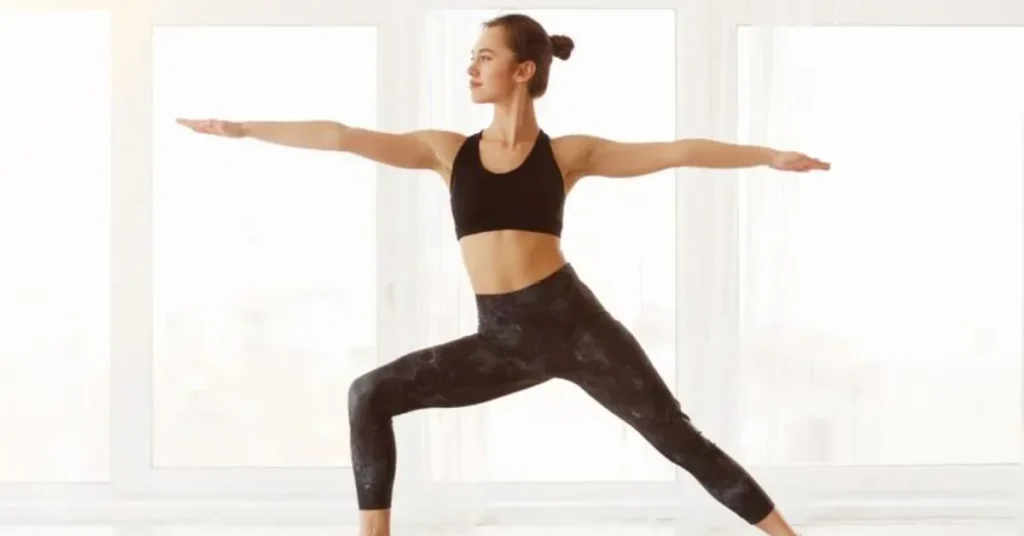
Benefits:-
- It builds lower body endurance by strengthening thighs and legs.
- It improves body flexibility by opening hips and chest.
- It enhances body stamina, concentration and mental focus.
6. Savasana (Final Relaxation)
This is the yoga pose generally practiced for final relaxation at the last stage. In this pose, the body remains still lying flat. The body in this asana relaxes where one lies flat on their back. It is simple but an effective pose that helps to relieve stress and calms the body, mind and soul.
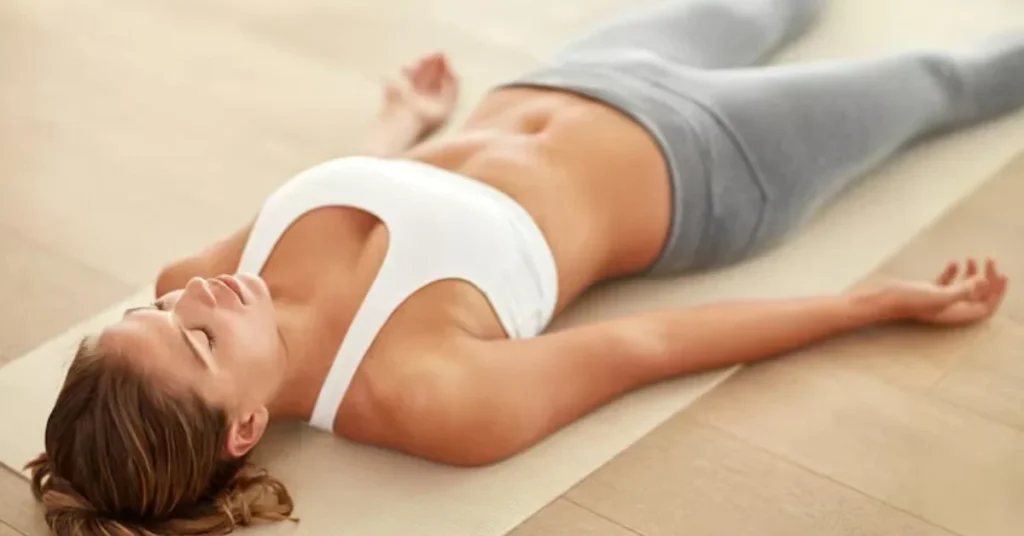
Benefits:-
- It improves the body posture by strengthening the back and spine.
- It relaxes the mind by calming the mental stress.
- It restores body energy and releases strain.
Read Also: 100 Hour Yoga Teacher Training In Rishikesh
Power Flow Vinyasa Yoga Sequence
A power vinyasa yoga is a yoga with higher intensity and faster workout style yoga session. The power Vinyasa yoga sequence focuses on building body strength, stamina, and cardiovascular fitness with faster transition. The arm balancing and core work is widely included in power vinyasa yoga practice with more repetitions in the number of Sun Salutations.
Ashtanga Yoga Vinyasa Sequence
Vinyasa yoga has evolved from the traditional ashtanga yoga vinyasa sequence. So, Ashtanga yoga is called to be the foundation of modern Vinyasa yoga. Ashtanga has a fixed sequence where every movement is linked with breath whereas Vinyasa yoga poses sequences are more creative, flexible and dynamic.
Closing Thoughts
Vinyasa yoga sequence has creativity, uniqueness and mixed formations of yoga with breath-based transitions. The yoga performed in Vinyasa flow sequence is not just a simple body movement rather it is more about creating mindful connection. Karmatic yoga, the best yoga teacher training school in Rishikesh provides a supportive environment where a balanced and effective yoga routine can be followed for health beneficiary outcomes.
Your Questions Answered
Q. Is Vinyasa yoga good for beginners?
A. Yes, it is good for beginners as well as advanced practitioners.
Q. What is the difference between Vinyasa and Power Vinyasa?
A. In comparison to Vinyasa, Power Vinyasa is comparatively more intense, faster and focuses on strength & cardio.
Q. How long should beginners practice a Vinyasa sequence on a daily basis?
A. It depends on the level. But usually it lasts for 45–60 minutes.
Q. Can Vinyasa yoga help with weight loss?
A. Yes. It helps in improving metabolism and burning unwanted calories.
Q. What is the total number of poses in a Vinyasa sequence?
A. No fixed number. It is totally dependent on the flow and can vary from 10 to 30 poses.
Q. What role does “breath” play in Vinyasa yoga?
A. In Vinyasa yoga, breath integrates with each body movement and helps maintain focus.