
Yoga practice is not only about doing physical asanas, but it is more of the inner connection with yoga. Yoga has a history of tradition where the traditional and yoga language Sanskrit was followed by yoga gurus and in yoga philosophy since ages.
The yoga language Sanskrit carries the depth, understanding and vibrational essence of yogic philosophy. No matter whether you are a modern yoga practitioner or a beginner, understanding sanskrit words for yoga poses help you connect deeply and authentically with the tradition as well as yoga.
In Ashtanga yoga, every yoga instruction is traditionally expressed in terms of Sanskrit and understanding these Sanskrit words is essential. Learning these sanskrit terms for yoga poses will help the practitioner to deepen awareness and preserve authenticity.
What Does Sanskrit Mean in Yoga?
Sanskrit is known as the “language of consciousness” which originated in India over 3000 years ago. It is one of the oldest classical and structured languages which holds the energetic power in each word when chanted.
In yoga, the Sanskrit language is called the sacred language which is also used in yogic scriptures like Bhagavad Gita, Yoga Sutras of Patanjali. So, to continue with the sanskrit legacy and the originality of yoga and to honor the lineage, yoga instructors and teachers prefer to use sanskrit terms for yoga poses. Globally, across the global yoga community, teachers prefer to use yoga asanas names in Sanskrit to maintain continuity with the original teachings.
Why Sanskrit Words for Yoga Poses Matter in Ashtanga Yoga?
Ashtanga yoga is also a modern form of classical yoga. It is introduced and popularized by K. Pattabhi Jois worldwide to continue the legacy of ancient sages. In Ashtanga Yoga, sanskrit terms are used from the counting, to instructing and to utilising yoga asanas names in sanskrit.

Also the word “Ashtanga” itself is in Sanskrit where “Ashta” means eight and “Anga” means Limbs. It is based on the eight-limbed path described in the Yoga Sutras of Patanjali which includes Yama (Ethical disciplines), Niyama (Personal observances), Asana (Posture), Pranayama (Breathing control), Pratyahara (Sense withdrawal), Dharana (Concentration), Dhyana (Meditation), Samadhi (Enlightenment).
Also Go Through:– What is Raja Yoga?
Few examples of sanskrit terms of yoga poses are as follows:
- “Asana” which means “posture”.
- “Utthita” which means “extended”.
- “Parivrtta” which means “revolved”.
This reflects how deeply yoga language sanskrit is used during Ashtanga Yoga practice.
In Ashtanga yoga, sanskrit words play a major role and understanding the sanskrit words for yoga poses helps practitioners:
- To develop deeper concentration with mind, soul, body and energy.
- To build inner-awareness, discipline and tradition.
- To follow and deeply connect with traditional yogic roots.
- To improve memorization of sequences in a better way.
- To enhance spiritual awareness along with mental and physical benefits.
Essential Sanskrit Words Used in Ashtanga Yoga Practice
In modern practice, Ashtanga is well- known for:
- Primary Series (Yoga Chikitsa)
- Intermediate Series (Nadi Shodhana)
- Advanced Series (Sthira Bhaga)
Below are the essential sanskrit words for yoga poses in Ashtanga yoga for primary series, intermediate series and advanced series.
Primary Series (Yoga Chikitsa – Yoga Therapy)
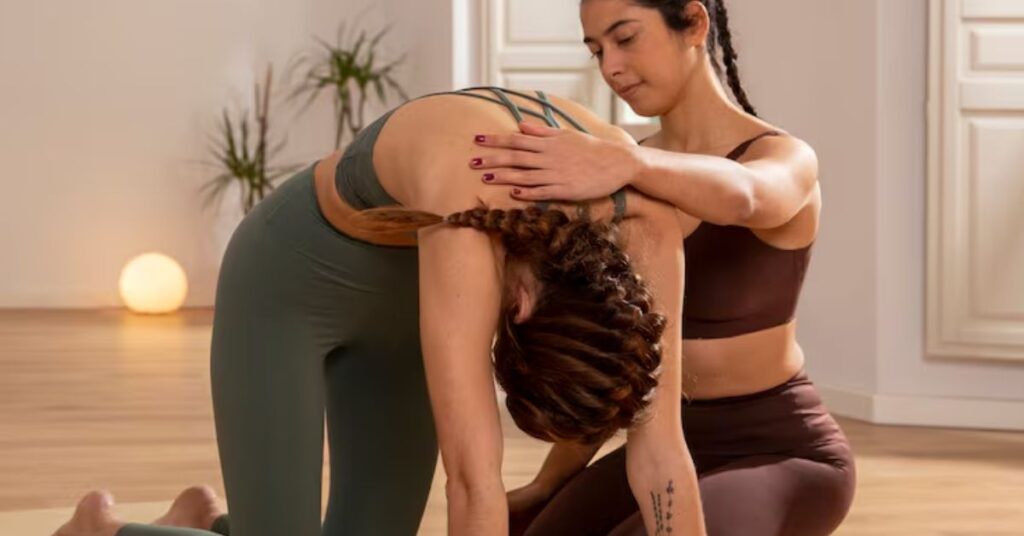
1. Surya Namaskara (Sun Salutation)
- The word “Surya” in Surya Namaskar stands for “sun” and the word “Namaskara” stands for salutation.
- It is the foundation of the Ashtanga practice that establishes rhythm and discipline.
- It links breath with the movement and builds strength gradually.
2. Tadasana (Mountain Pose)
- The word “Tada” in Tadasana stands for “mountain” and the word “asana” stands for posture.
- This pose establishes body awareness, alignment and stability.
3. Trikonasana (Triangle Pose)
- The word “Tri” in Trikonasana stands for “three” and the word “kona” stands for angle.
- This pose stretches the legs, expands the side body and improves body flexibility.
4. Parsvakonasana (Side Angle Pose)
- The word “Parsva” in Parsvakonasana stands for “side” and the word “kona” stands for angle.
- This pose stretches the side waist and builds leg strength and enhances spinal flexibility.
5. Uttanasana (Standing Forward Fold)
- The word “Ut” in Uttanasana stands for “intense” and the word “tan” stands for stretch.
- This pose intensely stretches hamstrings and back.
- It helps in calming the nervous system and reducing mental stress.
6. Adho Mukha Svanasana (Downward Facing Dog)
- The word “Adho” stands for “downward”, the word “mukha” means “face” and the word “svana” means “dog”.
- This is a strengthening pose that strengthens arms and legs.
7. Chaturanga Dandasana (Four-Limbed Staff Pose)
- The word “chatur” stands for “four”, the word “Anga” means “limbs” and the word “danda” means “staff”.
- This pose helps in building core muscles and arm strength.
8. Bhujangasana (Cobra Pose)
- In Bhujangasana, the word “bhujanga” means serpent.
- This pose helps in opening the chest, strengthens the spine and energizes the body.
9. Paschimottanasana (Seated Forward Bend)
- In Paschimottanasana, the word “paschima” stands for west (back body) and the word “uttana” means intense stretch.
- This pose helps in stretching the entire back of the body and improves flexibility.
10. Navasana (Boat Pose)
- In Navasana, the word “nava” means “boat” and “asana” means posture.
- This pose helps in strengthening core and builds endurance.
11. Marichyasana (Sage Marichi Pose)
- In Marichyasana, the word “Marichi is the name of a sage” and the word “asana” means posture.
- This pose is a twisting posture that helps in improving digestion.
12. Baddha Konasana (Bound Angle Pose)
- In Baddha Konasana, the word “Baddha” means “bound” and the word “Kona” means “angle”.
- This is a seated posture pose that opens hips and inner thighs.
13. Kurmasana (Tortoise Pose)
- The word “Kurma” in Kurmasana means “tortoise” and “asana” means “posture”.
- This pose helps to encourage inward focus.
14. Setu Bandha Sarvangasana (Bridge Pose)
- In Setu Bandha Sarvangasana, the words “setu” means “bridge”, “bandha” means “lock”, “sarva” means “all” and “anga” means “limbs”.
- It helps in strengthening back and opening the chest.
15. Savasana (Corpse Pose)
- In Savasana, the word “sava” means “corpse” and the word “asana” means “posture”.
- It is the final relaxation posture and helps in relaxing the body.
Intermediate Series (Nadi Shodhana – Nerve Cleansing)
1. Salabhasana (Locust Pose)
- In Salabhasana, the word “salabha” means “locust”.
- This pose helps in improving body posture and spinal stability.
2. Dhanurasana (Bow Pose)
- In Dhanurasana, the word “dhanur” stands for “bow” and the word “asana” stands for “posture”.
- In this pose, the body forms the shape of a bow which stretches the front body and strengthens the back.
3. Ustrasana (Camel Pose)
- In Ustrasana, the word “ustra” means “camel”.
- This pose helps in opening the chest and shoulder and enhances spinal flexibility.
4. Kapotasana (Pigeon Pose)
- In Kapotasana, the words “kapota” means “pigeon” and “asana” means “posture”.
- This pose improves flexibility by opening hips and chest deeply.
5. Eka Pada Sirsasana (One Foot Behind Head Pose)
- In Eka Pada Sirsasana, the words “eka” stands for “one”, “pada” stands for “foot” and “sirsa” stands for “head”.
- This pose helps in improving concentration power and balance.
6. Pincha Mayurasana (Feathered Peacock Pose)
- In Pincha Mayurasana, the word “pincha” means “feather” and the word “mayura” means “peacock”.
- It is a forearm balance posture that helps in strengthening the shoulders and arms.
7. Karandavasana (Duck Pose)
- In Karandavasana, the words “Karandava” means “duck” and “asana” means “posture”.
- This pose helps in arm balancing and strengthens wrists & core muscles.
8. Mayurasana (Peacock Pose)
- In Mayurasana, the words “mayura” means “peacock” and “asana” means “posture”.
- The Mayurasana pose helps in digestion and in strengthening wrists.
Advanced Series (Sthira Bhaga – Strength and Grace)
1. Vasisthasana (Side Plank Variation)
- In Vasisthasana, the word “Vasistha” means “Sage Vasistha”.
- This is a side balancing posture for arm balance and helps in cultivating stability.
2. Visvamitrasana
- In Visvamitrasana, the word “Visvamitra” means “Sage Visvamitra”. This is named after the Sage Visvamitra.
- This pose helps in building flexibility by deep side stretching with leg extension.
3. Kasyapasana
- The word “Kasyapa” means “Sage Kasyapa” in Kasyapasana.
- The Kasyapasana helps in hip opening and with body balance.
4. Bhairavasana
- The word “bhairava” in “bhairavasana” stands for “Form of Shiva”.
- This is an advanced leg-behind-head posture and builds strength and control.
5. Skandasana
- In Skandasana, the word “skanda” means “warrior deity”.
- It is a deep lateral squat posture that builds lower-body strength, balance, and stability.
6. Tittibhasana (Firefly Pose)
- The word “tittibha” in Tittibhasana means “firefly”.
- Tittibhasana strengthens wrists, core and arm balance.
7. Gandha Bherundasana
- In Gandha Bherundasana the word “Gandha Bherunda” means “mythical bird” representing fearlessness and strength.
- This pose helps in building intense back strength, improves balance.
8. Hanumanasana (Monkey Pose)
- In Hanumanasana, the word Hanuman means the “devotee of Rama”.
- This pose is a full split position and represents strength and devotion.
Sanskrit Counting in Ashtanga Yoga
- “Eka” which means “One”.
- “Dve” which means “Two”.
- “Trini” which means “Three”.
- “Chatvari” which means “Four”.
- “Pancha” which means “Five”
- “Shat” which means “Six”.
- “Sapta” which means “Seven”.
- “Ashta” which means “Eight”.
- “Nava” which means “Nine”.
- “Dasha” which means “Ten”.
Last Words
Learning Sanskrit in yoga plays a major role for better understanding, spiritual awakening, inner awareness and authentic traditional learning. It is not only about simply learning Sanskrit terminology but to reconnect with the yoga’s root.
Sanskrit terms are believed to harmonize the body, soul and mind not only in yoga but in spiritual grounds as well. Ancient yoga gurus have passed the tradition of the yoga language Sanskrit to preserve the true value and meaning of yoga, poses and philosophy.
Ashtanga yoga helps the yoga enthusiasts and practitioners to live the yoga in authentic form. While practicing Ashtanga yoga in the best yoga schools, instructors usually use yoga asanas names in Sanskrit. It helps students to make a deeper connection with yoga and its energies in purest form.
If you are looking for the best yoga school to experience yoga rooted in traditional approaches, then Karmatic Yoga in Rishikesh is the best choice. It helps students by providing yoga training in its purest and authentic form.
Common Asked Questions
Q. How to start learning Sanskrit words for yoga poses?
A. Firstly start learning basic root and common words with correct pronunciation.
Q. Are Sanskrit yoga pose names the same in all yoga styles?
A. Yes, most of the yoga poses in all yoga styles have the same name but sequencing may vary.
Q. How Sanskrit improves Ashtanga Yoga practice?
A. Sanskrit helps in Ashtanga Yoga by building stronger traditional connections and enhancing concentration
Q. What is the spiritual significance of Sanskrit chanting in yoga?
A. It creates positive awareness and supports meditation by calming the mind and soul.
Q. How long does it take to learn the basic yoga language Sanskrit?
A. It depends on person to person but it usually takes few weeks with consistent practice.
Read Post:-